

Fanatics Joins Forces with NFL’s Columbus Blue Jackets, Opening a Retail Sportsbook By the End of August

Fanatics Joins Forces with NFL’s Columbus Blue Jackets, Opening a Retail Sportsbook By the End of AugustNational Football League (NFL) franchise Columbus Blue Jackets has signed a deal with sports betting operator Fanatics Betting and Gaming, under which the two companies will collaborate to open a retail sportsbook near the Blue Jackets’ home arena. Fanatics has announced that the land-based sportsbook is slated to open at the end of August.

The sportsbook is expected to occupy over 5,000 square feet and feature four betting windows, 14 kiosks, a video wall, and 20 TV monitors. A full-service restaurant will also take care of the sportsbook’s customers who want to enjoy delicious meals while watching sporting events. Blue Jackets’ Senior Vice President and Chief Operations Officer Cameron Scholvin did not hide his excitement about this partnership.

Customers at the sportsbook will be able to place bets on a variety of markets, including the National Football League and National Basketball Association (NBA). Fanatics Betting and Gaming will join forces with a team of trading suppliers to provide the betting odds at the new sportsbook.

A curious fact is that Fanatics owns the first land-based sportsbook located inside an NFL stadium. Besides, the operator is expected to launch its new online betting platform in Ohio, Maryland, Massachusetts, and Tennessee anytime soon. Actually, the company has already launched its sportsbook’s beta product in these states.

Ohio Allows Partnerships Between Betting Companies and Sports Organizations

Ohio legalized online and retail sports betting on January 1, 2023. Currently, there are over 15 licensed sports betting operators, including but not limited to DraftKings, FanDuel, and BetMGM. Since its launch earlier this year, Ohio’s sports betting industry has experienced unprecedented growth. In the first month of legal sports betting in the Buckeye State, punters wagered a total of $1.1 billion. Although the sports betting market in Ohio slowed down, the industry continues to generate millions of dollars for the state in tax revenue.

Ohio is among the few states that allow sports teams to collaborate with sports betting operators and open retail sports betting shops at or near their home stadiums. Fanatics has also teamed up with Cleveland Guardians to open a second retail sportsbook, which will be in close proximity to Progressive Field. On Tuesday, a Fanatics spokesperson said that the retail sportsbook would most likely open by the end of August.

The Columbus Blue Jackets collaborate with Fanatics Betting and Gaming and Prophet Exchange for online sports betting in Ohio. Although Prophet Exchange signed a deal with the NFL franchise last October and announced the sports betting platform would be launched by the end of H1 2023, the betting company is yet to go live.

Ohio is home to several retail sportsbooks, including one operated by Caesars at the Cleveland Cavaliers’ Rocket Mortgage Fieldhouse and another owned by BetMGM at the Cincinnati Reds’ Great American Ball Park. Not long ago, BetMGM announced that it plans to relocate its sports betting shop in a bid to attract more punters.

Belgian Gambling Watchdog Reminds Operators That All Communications Must Carry Responsible Gambling Messages

Belgian Gambling Watchdog Reminds Operators That All Communications Must Carry Responsible Gambling MessagesBelgium’s gambling regulator, the Kansspelcommissie (KSC), has reminded its licensees to warn players about the possible risks of gambling through all possible communication channels. The new requirement comes as part of the recently implemented ban on gambling advertising. The Belgian government has decided to impose a blanket ban on gambling advertising across various platforms, including television, radio, cinemas, magazines, newspapers, and public spaces. The ban became effective on July 1.
The gambling regulator has contacted all gambling companies licensed in Belgium to remind them that all their communications and messages visible to players must carry preventive messages, emphasizing that gambling can be addictive and that setting limits is advisory. Last month, the gambling regulator changed the preventive message from “Please play in moderation” to “Gambling is addictive”. Furthermore, Article 25 of the Royal Decree stipulates that operators’ messages to their customers must provide links to the country’s self-exclusion scheme, also known as Stopoptijd.

From January 2025, gambling advertising in stadiums will be banned. The Belgian government has decided to enforce a sponsorship ban in 2028 in order to allow existing deals to expire naturally. The new measures aim to curb gambling addiction and debt. The ban was heavily criticized by operators, but lawmakers argued that it followed research, revealing that advertisements encourage people to try gambling or gamble more.

Belgian Lawmakers Hope the Ban Will Curb the Impact of Gambling Advertisements on People, But How Will It Affect the Market?

The blanket ban was initially introduced by Vincent Van Quickenborne in a bid to minimize the impact of gambling commercials. Gambling companies, however, did their best to convince lawmakers to thwart the ban, but their attempts failed. Under the new Royal Decree, Belgians must be at least 21 years of age instead of 18 to engage in gambling activities.

Despite the stiff gambling advertising standards, Belgium still whets the appetite of many foreign operators. Last month, Betsson announced that it would enter the Belgian market through the acquisition of betFIRST. Software provider Pragmatic Play also expanded its footprint on Belgian soil by signing a content agreement with Peppermill Casino.

At the beginning of this month, Belgium’s Competition Authority announced the distribution agreement between Entain’s Ladbrokes and French betting operator Pari-Mutuel Urbain (PMU) was against the country’s competition rules.

The Netherlands, one of Belgium’s neighbors, has also implemented a similar ban on gambling advertising. The ban came into effect on July 1, prohibiting operators from promoting their gambling services on radio, television, and billboards. The measure was proposed following a public outcry over the number of gambling commercials bombarding people every day. From July 1, 2024, gambling sponsorships of sporting events and programs, while sponsorships of sports venues and clubs will be banned from 2025. Operators, however, can advertise their gambling products within online gaming environments, on-demand streaming services, social media, or through direct mail.

EU Commission Asks Maltese Authorities to Provide More Information about New Gambling Legislation

EU Commission Asks Maltese Authorities to Provide More Information about New Gambling LegislationAfter a couple of questions were raised by Sabine Verheyen, a German member of the European Parliament and the European People’s Party Group, the European Commission decided to look into the proposed changes to the Gambling Act in Malta. The suggested amendments seek to protect online gambling companies based in the country from legal action in other countries in the European Union (EU).

The Commission has stated that they are currently examining the draft legislation and have asked Maltese lawmakers for more information about the proposed amendment to ensure that the new legislation is compliant with EU standards. After analyzing the feedback received from the government, the Commission is to determine what further steps could be taken.

The Commission was also asked whether or not it plans to object to the new Maltese legislation, which could potentially disregard judgments from other EU countries. However, the Commission has yet to provide an answer. Interestingly, Sabine Verheyen also asked the Commission if it was aware of potential connections between the Maltese government and the gambling industry and whether there had been any corruption in the past. The Commission explained that it had not been informed about the presence of such links.

Malta Strives to Regain Its Strong Position on the iGaming Market

Data analysis carried out by media outlet The Shift revealed that the licenses issued by the Maltese regulator in 2022 were 75% fewer compared to 2018. The jurisdiction was added to Financial Action Task Force’s grey list in 2021. As a result, the number of new license registrations dropped by 50% compared to the previous year. Malta was taken off the grey list in 2022, but its reputation was significantly damaged.

The country is now seeking to regain its popularity among gambling operators. Thus, economy minister Silvio Schembri has proposed legislation seeking to protect Maltese gambling companies from foreign prosecution. The proposal, however, was severely criticized by Austrian and German lawyers, representing clients who started a lawsuit against Maltese gambling companies that reportedly offered their services in Austria and Germany without having an appropriate license.

In a letter addressed to the European Commission, the legal experts expressed their strong disapproval of the Maltese gambling legislation, explaining that the new law would breach the fundamental rights of EU citizens. The Malta Gaming Authority (MGA) responded that players from these jurisdictions were encouraged to take legal action against Malta-based companies to recover their losses.

Given that the Gaming Amendment Act becomes law, taking legal action against a Maltese gambling company concerning the provision of gambling services authorized by the MGA would be almost impossible. Under the new legislation, Maltese courts should not accept and enforce sentences and decisions taken by international courts.

Massachusetts Gambling Regulator Consider Sanctioning DraftKings for Accepting Prohibited Tennis Bets

Massachusetts Gambling Regulator Consider Sanctioning DraftKings for Accepting Prohibited Tennis BetsDuring an adjudicatory hearing held on Monday regarding DraftKings’ self-reported violations, the Massachusetts Gaming Commission (MGC) voiced its concerns regarding the incident but did not sanction the operator. The gambling watchdog is expected to issue a written ruling anytime soon and determine whether or not to take action against the operator.
This March, DraftKings admitted that it mistakenly accepted 864 wagers totaling $7,867 on UTR Pro Tennis Tour events that are not authorized by the MGC. DraftKings told the gambling watchdog that the mistake was caused by “miscommunication” between the company’s trading and trading compliance teams, who copied the list of all tennis offerings from another state without verifying whether or not it was compliant with Massachusetts’ sports wagering catalog.

The betting company self-reported the violations in an email on March 23. DraftKings voided all wagers on the tennis event, removed winnings from punters’ accounts, and returned all wagered money to bettors. The operator also removed all UTR markets and asked the company’s compliance team to always check all new markets before publishing them.

UTR tennis tournaments are open to all tennis players who are 14 years of age or older. That is why the MGC did not add them to the list of approved sporting events. During the Monday meeting, MGC Chair Cathy Judd-Stein said she appreciated DraftKings’ honesty but was also frustrated by the company’s violations.

DraftKings Claims It Will Never Violate the Law on Purpose

Part of the Monday meeting was held behind closed doors upon DraftKings’ request. Jake List, senior director of regulatory operations at DraftKings, explained that some information discussed during the meeting revealed how the company operates and could be exploited by competitors. Mr. List told commissioners that a lot of communication was needed for a sportsbook to comply with the regulations of the different states. He also noted that DraftKings had a flawless reputation in other states and would never purposefully violate the law.

DraftKings is the first licensed mobile sportsbook in Massachusetts that violated the state’s gambling laws. However, the state’s three casinos, Encore Boston Harbor, Plainridge Park Casino, and MGM Springfield, also admitted to accepting bets on unauthorized sporting events earlier this year.

Although betting on in-state college teams is prohibited in Massachusetts, Encore Boston Harbor took wagers on a Boston College women’s basketball game, while Plainridge Park allowed betting on a Merrimack College game. MGM Springfield, on the other hand, accepted illegal wagers on two Harvard men’s basketball games.

But despite the violations, DraftKings is unlikely to lose momentum in the Bay State. It is considered one of the best-performing sportsbooks in Massachusetts. According to the MGC, the sports betting company’s total handle reached $159.4 million in June, while the state received $15.5 million in revenue from DraftKings’ operations.

Vermont Opens Bidding Process for Online Sportsbook Licenses

Vermont Opens Bidding Process for Online Sportsbook LicensesLast Wednesday, Vermont’s gambling regulator, the State’s Liquor & Lottery Commission, posted the Request for Proposal (RFP) on its official website, officially launching the bidding process for online sportsbook licenses. Vermont will accept bids by August 28 as lawmakers hope to have the sports betting industry up and running by January 1, 2024. Under the sports betting law signed by Governor Phil Scott last month, between two and six operators will receive licenses to cater to the needs of Vermonters. Sports betting companies will be allowed to offer their services online only.
The state initiated the bidding process after the Vermont Department of Liquor and Lottery (VDLL) approved the set of rules and requirements for bidders. VDLL Commissioner Wendy Knight explained that the rules may change following the sports betting market launch. Knight explained that the regulator must first see how the industry will develop to determine whether or not the requirements need to be reworked.

VDLL is tasked with overseeing the bidding process. Major operators expected to participate in the bidding process are BetMGM, FanDuel, DraftKings, and Caesars Sportsbook. The applicants will be awarded scores based on various factors, such as an operator’s track record and revenue sharing.

What are the Requirements Operators Must Meet to Acquire a Vermont Sports Betting License?

Interested operators can find detailed information about the licensing procedure and the requirements in the 191-page RFP. Licenses will be valid for three years, but operators will be provided with the opportunity to renew their permits for up to two more years. The regulator has established a 1,000-point scale to evaluate bidders based on different criteria, including software quality, financial stability, responsible gambling program, and others.

Applicants are required to pay a $550k fee and agree to a minimum revenue-sharing requirement of 20%. Bidders who agree to additional revenue sharing of up to 50% will receive extra points. Operators who want to participate in the bidding process must provide information about the revenue they expect to generate, advertising schemes, responsible gambling programs, and the company’s background in other jurisdictions.

Knight explained that the bidding process aims to ensure that the state would make the most of the sports betting market. She expressed her hopes that the names of the operators eligible to receive a license would be announced by the end of September. After that, a negotiation process, expected to last for several months, will take place. Knight said that if everything goes as planned, sports betting in Vermont would be live in time for the Super Bowl.

Another state that legalized sports betting this year is Kentucky. But unlike Vermont, sports betting in Kentucky is expected to be up and running by September 7 – in time for the long-awaited NFL season.

PAGCOR Expects Tax Payments from POGOs to Double by the End of This Year

PAGCOR Expects Tax Payments from POGOs to Double by the End of This YearOn Monday, the Philippine Amusement and Gaming Corporation (PAGCOR) announced that the revenues generated by the Philippine offshore gaming operations (POGOs) could reach P24 billion by the end of this year. The announcement was quite shocking considering the declining presence of POGOs. PAGCOR chairman and chief executive officer Alejandro Tengco issued a statement, explaining that the revenue generated by POGOs could double although the number of registered offshore operators declined to just 32.

In 2022, the government’s tax intake from POGOs reached P11 billion. The country’s gambling regulator, PAGCOR, believes that the tax revenues generated by POGOs would increase by over 100% to P24 billion by the end of this year. Figures released by the Department of Finance (DOF) revealed that POGOs’ tax payments to the Bureau of Internal Revenue (BIR) surged by 127% to P8.88 billion from P3.91 billion in 2021 despite the declining presence of such companies in the country. According to data, POGOs paid withholding taxes of P4.35 billion and gaming taxes of P3.65 billion.

As of July 18, there are 32 registered offshore gaming companies and 106 accredited service providers. However, the industry has been under scrutiny due to allegations of human trafficking, which provoked a series of congressional hearings. Senator Sherwin Gatchalian even recommended a complete ban on POGOs. The controversy surrounding this business resulted in PAGCOR canceling the licenses of 46 POGOs and 228 service providers.

Why POGOs are Under Fire in the Philippines?

According to Gatchalian, banning POGOs would not have a feasible impact on the economy, but POGOs must be prohibited because they threaten the country’s reputation, which would affect the tourism industry. Tengco explained that thanks to the collaboration between the gambling regulator and law enforcement agencies, the number of illegal gambling operators has significantly decreased.

He added that it is essential for the country to prevent operators from using PAGCOR’s license to disguise their illegal activities. According to Tengco, the Philippines must eradicate illegal gambling in order to emerge as an attractive gaming and entertainment destination for tourists and investors.

During the first half of the year, the gross gaming revenue across the country rose by 48.68% to P136.37 billion. PAGCOR has revealed that its goal is to reach P244.84 billion in gross gaming revenue for the entire sector. It also became clear that the gambling watchdog aims to generate P68.490 billion in revenues from its gambling operations alone by the end of this year.

PAGCOR plans to launch its online gambling platform by the first quarter of the next year. Tengco explained that this would allow the regulator to diversify its customer base and benefit from the sector’s vigorous performance.

Entain and Superbet Withdraw Applications to Purchase Majority Stake in Slovenia’s Monopoly Sportsbook

Entain and Superbet Withdraw Applications to Purchase Majority Stake in Slovenia's Monopoly SportsbookSlovenia’s Ministry of Finance confirmed that gambling companies Entain and Superbet have abandoned their plans to purchase a majority stake in the country’s monopoly sportsbook operator Športna Loterija. The two applicants have withdrawn their bids because the government asserted that the buyer must donate some of its profits to support the development of the Slovenian sport.

Entain, one of the largest gambling companies listed on the London Stock Exchange and the FTSE 100 Index, was ready to pay between €50 million and €60 million to acquire a majority stake of 57% in Sports Lottery, which is currently held by the Olympic Committee of Slovenia, the Football Association of Slovenia, and the Skiing Association of Slovenia. The company reportedly has joined forces with the Czech investment fund Emma Capital for the bidding process. The Romanian-based gambling company Superbet reportedly offered a slightly higher price than Entain.

With both gambling companies withdrawing their applications, Športna Loterija is unlikely to privatize a part of its operations by the end of this year. However, the Slovenian Ski Association (SZS), which owns a 20% stake in the Slovenian sports betting company, said that the sale may still take place by the end of the year.

Over the last few weeks, the organizations holding 57% of Sports Lottery have been seeking to liquidate part of the company’s operations due to concerns associated with the opening of the Slovenian sports betting market to foreign operators.

Representatives of Entain explained that the company decided to pull out of the bidding process after discussing all possibilities. The gambling firm refrained from providing further details and refused to comment on possible future entry into the Slovenian market.

Why the Two Gambling Companies Decided to Exit the Bidding Race?

At the beginning of the month, the Olympic Committee announced that the price offered by the two applicants was good, but the gambling companies must agree to finance the development of the Slovenian sport before completing the sale. The Olympic Committee also announced that it would abandon the liquidation plans given that the country promises to uphold the Sports Lottery’s monopoly.

In June, Entain approved the purchase of Polish sports betting company STS Holdings for a staggering amount of £750 million. The acquisition deal was greenlit by the company’s largest shareholders, Mateusz Juroszek and Zbigniew Juroszek, who collectively hold a 70% stake.

But New York investment company Eminence Capital, which owns a 2.1% stake in Entain, published an open letter addressed to the company’s board members, calling the deal “destructive”. Ricky Sandler, chief executive officer of Eminence, pointed out that Entain’s stock price had decreased by 8% following the acquisition.

Singaporean Government is Empowered to Remove Illegal Online Gambling Content

Singaporean Government is Empowered to Remove Illegal Online Gambling ContentOn Wednesday, Singaporean lawmakers voted in favor of a bill under which the government is authorized to order individuals, entities, online and Internet service providers, and app stores to remove or block access to illegal online content. During the second reading of the bill, Minister for Communications and Information Josephine Teo said that the legislation would help the country to crack down on online crimes and illegal gambling activities. Mrs. Teo added that the legislation also included a special provision regarding scams and malicious cyber activities.
According to Teo, proactive measures were needed to help the country prevent cybercrimes. She added that the government’s efforts alone would be insufficient to cope with the problem. Mrs. Teo also suggested that lawmakers used similar laws implemented by other countries, such as Germany, Australia, and the United Kingdom, for reference when creating the Online Criminal Harms Act.

Under the new law, the government is allowed to issue five types of directions when it has reasons to believe that an online crime has been committed. The Ministry of Home Affairs explained that the stop communication direction would order individuals or entities posting criminal content online to remove the post. The disabling direction would require online service providers, such as Facebook, TikTok, WhatsApp, and WeChat, to block access to specific content.

Mrs. Teo explained that online crimes may cause significant harm to victims, and the requirements to issue directions should be lower than for other crimes. She also pointed out that online crimes could happen anytime and anywhere. Besides, cybercrime is spreading quickly, meaning countries should implement measures to solve the problem.

The New Law is Expected to Crack Down on Cybercrime

Teo explained that the new legislation covers all communication channels and mediums that criminals can exploit, while the Broadcasting Act, amended in 2022, governs only social media services. The new law also extends to money lending, illegal gambling, and drug-related crimes. According to Mrs. Teo, the means to deal with scams and online crimes are different, and the two laws will complement each other.

When asked how the country will force online platforms to comply with the new law, Mrs. Teo said that the government would prosecute violators. Moreover, the competent authority would issue orders and block access to non-compliant online platforms. Teo also assured citizens that the bill does not require online companies to disclose their users’ sensitive information. However, the government can issue directions to messaging non-compliant platforms to block the accounts of Singaporean users.

Online gambling is illegal in Singapore, but many offshore online casinos accept players from the island. The new law is expected to combat illegal gambling platforms targeting Singaporeans. The new law is expected to clamp down on illegal gambling activities and protect people from gambling-related problems.

Indian National Congress President Claims Puducherry Government Secretly Supports Establishment of Gambling Venues

Indian National Congress President Claims Puducherry Government Secretly Supports Establishment of Gambling VenuesPresident of Puducherry Indian National Congress (INC) V. Vaithilingam has criticized the state government for stealthily supporting the establishment of gambling venues in Puducherry. During a press conference held this Tuesday, he said that the Yanam Royal Recreation Club was forced to cease operations for more than six months after public backlash. However, the venue is again operating thanks to the full support and backing of the AINRC-BJP government.
Vaithilingam said that the government often claims it has no funds and uses this as an excuse to support the establishment of gambling clubs. According to him, the government used a similar reason to award licenses to liquor outlets, and now it is doing the same with gambling outlets.

Vaithilingam could not say who would benefit from the gaming clubs – the state or the people in the government. But the Yanam Royal Recreation Club has been fully supported by Puducherry’s lieutenant governor Tamilisai Soundararajan. Vaithilingam has pledged to write a letter to the president and inform her about the situation in Puducherry. He added that gambling has been taking place in the state for long.

The Puducherry government has previously announced that it plans to ban online rummy. The idea was backed by Public Works Department (PWD) Minister Arumugam Namassivayam, who asserted that the state would take a similar approach as Tamil Nadu in prohibiting online rummy. However, online rummy is classified as a game of skill by the Supreme Court, and banning it would provoke some sharp reactions. And it would be even more contradictory if the government bans online rummy while allowing, and even supporting, gambling clubs.

Gambling is a Hot Topic Not Only in Puducherry But Also in Tamil Nadu

Under the Public Gambling Act, organizing or wagering money on games of chance is illegal in India. However, the law allows Indians to play skill-based games. The problem is that there are no specific rules to differentiate between games of luck and games of chance. Sometimes the line between the two types of games can be very thin, which often leads to heated disputes among legislators.

In India, individual states have the right to introduce their own gambling regulations. In April this year, Tamil Nadu Governor R. N. Ravi gave the nod to a blanket ban on all gambling activities. His decision was provoked by the alarming number of suicides because of gambling. The bill stipulates that online gambling is more addictive than land-based gambling and must be prohibited. But the governor’s decision to greenlight the bill seeking to ban online gambling resulted in a dispute between Tamil Nadu and central governments.

At the end of April, the All India Gaming Federation (AIGF) announced that it would legally challenge Tamil Nadu’s online gambling ban. According to the industry entity, the anti-gambling law is unconstitutional and must be reversed. The AIGF also claimed that the state lacks the legislative competence to frame such a law.

Maine Governor Quashes Tribal Sovereignty Bill in a Bid to Avoid Potential Conflicts

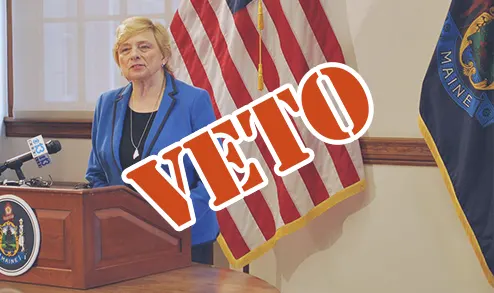
Maine Governor Quashes Tribal Sovereignty Bill in a Bid to Avoid Potential ConflictsOn Friday last week, Governor Janet Mills turned down a bill seeking to grant Wabanaki tribes access to federal laws, even though the House and the Senate overwhelmingly approved the legislative effort. The proposed legislation would allow the tribe to benefit from some federal laws, except for gaming laws allowing casinos and laws regarding serious crime. Gov. Mills explained that she supports the idea of giving the Wabanaki Nations more rights but vetoed the legislation because such a reform could lead to unnecessary lawsuits against the state and possible conflicts.

In a six-page veto message, Gov. Mills said that if the bill becomes law, Maine tribes would no longer comply with state laws which would lead to problems. Governor Mills asked the tribes to cooperate with the administration and find a solution instead of implementing a bill that would cause more complications.

As BonusInsider reported at the end of June, the House passed the legislation on a 100-47 vote. Lawmakers supporting the legislation, also known as LD 2004, said it would put the Wabanaki Nations on almost the same footing as most other federally recognized tribes in the United States. However, the tribes would be prohibited from organizing Class II gaming on their land – a provision added by legislators so the bill could garner support from Maine Republicans.

There is Still Chance for the Bill to Become Law

Since 1980, the tribes in Maine have been governed by the Maine Indian Claims Settlement Act. Under the act, the Native American tribes in the state are governed by state laws, meaning they cannot benefit from federal laws passed after 1980 unless specifically mentioned otherwise. The Indian Gaming Regulatory Act (IGRA) became effective in 1988 but did not mention Maine’s tribes. Thus, the Wabanaki Nations were not allowed to conduct gambling activities on their tribal lands.

Gov. Mills tried to gloss over the problem by agreeing to grant the tribes exclusive rights over online sports betting. In 2022, the state legalized sports wagering, but the official launch date is still not determined. She said she wants the tribes to be treated fairly and confirmed that they already benefit from most federal laws.

Gov. Mill’s administration explained that they would have to modify the existing state laws affecting public health, water and air quality, land use, fish and game regulations, and fire and building safety if the bill becomes law, which is still possible because lawmakers can override the governor’s veto.

Lawmakers can override the veto with a two-thirds vote in both the House and the Senate. Although the bill passed the Legislature with an overwhelming majority, the legislators who voted in favor of the bill before may change their minds because now they will have to vote against the governor’s decision.