

Richmond City Council Members Greenlight $562-Million Casino Resort Project

Richmond City Council Members Greenlight $562-Million Casino Resort ProjectThis Monday, Richmond City Council members approved a $562-million One Casino + Resort casino project after the proposal was rejected by voters in November 2021. Now, the odds for the casino project improve as more Richmonders have realized that the casino resort would have a positive effect on the city’s economy. Thus, many casino supporters are optimistic that the One Casino + Resort project will be back on the ballot.

In May this year, the City Council introduced an ordinance that could allow for a second referendum on the controversial One Casino + Resort project. Richmond City Councilwoman Reva Trammell explained that some Richmonders opposed the proposal because they were afraid of the negative effects of gambling and that the gambling venue would lead to increased crime levels in the area. Trammell added that the reason for this wrong perception was “misinformation” and “miscommunication”.

In a citywide referendum held in November 2021, 51% of Richmond residents voted against the construction of a casino resort in the city’s South Side, while 49% supported the idea, claiming that the gambling venue would create jobs, attract tourists, and boost the local economy.

At the meeting, which was held yesterday, many Richmonders spoke in favor of the casino resort, highlighting the economic benefits of having a casino in the city. Richmond resident Cynthia Hinds said the casino resort would bring financial stability to the city. But before the casino project is placed on the local ballot, scheduled to take place this November, it must be approved by Virginia Lottery and Richmond Circuit Court.

What Economic Benefits the Casino Resort Will Produce?

One Casino + Resort will occupy 90,000 square feet and offer a casino and hotel. The gaming area will host 1,800 slot machines, 100 gaming tables, and a sportsbook. The hotel will have 150 guest rooms and apartments.

If the casino resort receives approval from the council and Richmond residents, the city will receive a one-time upfront payment of $25 million. A study revealed that the resort would generate approximately $29.7 million in general fund revenue and create 1,300 jobs. Earlier this month, Leonard Sledge, the city’s economic development director, announced that the casino resort is expected to open doors in 2026 if Richmonders vote in favor of the project this November.

A contender for the unused casino license allocated to Richmond is the nearby city of Petersburg. The city has joined forces with the Baltimore-based Cordish Companies for the establishment of a $1.4-billion casino, hotel, and entertainment complex. The massive project would pump up to $10 billion into Central Virginia’s economy.

The situation heated up quickly after it became clear that Richmond considers holding a second vote. Concerned about the possibility of competing with another gambling establishment in the area, Petersburg and the Cordish Companies have announced they will abandon their casino plans if Richmonders are allowed to vote again.

Convenience Store Owners Push Massachusetts Lawmakers to Scrap Online Lottery Plans

Convenience Store Owners Push Massachusetts Lawmakers to Scrap Online Lottery PlansMassachusetts retailers urge legislators to vote against plans to allow lottery games to go online because such a move would negatively impact their revenues, which depend on in-person sales to a large extent. In April this year, the Joint Committee on Consumer Protection and Professional Licensure considered allowing an online lottery.
Provisions for an iLottery were included in the $56-billion budget bill for 2024, which passed the House on April 26. According to estimates, the online lottery will generate approximately $200 million in tax revenues for the state. Under the proposal, Massachusetts residents would be able to buy lottery tickets online, using their debit cards. Funds raised from the iLottery operations would fund early education and childcare.

A conference committee comprised of six members is still working on negotiating the final details of the budget. They must agree to a spending plan before sending it to Governor Maura Healey for approval.

Chelsea Turner, chief operations officer of the Massachusetts Council on Gaming and Health, warned that thorough research into responsible gaming and the social and economic impact of an online lottery must be conducted if the Legislature approves the iLottery proposal. Turner also noted that Massachusetts residents spend approximately $800 on lottery tickets per year, which is the most in the entire country.

The iLottery Proposal Does Not Include Guardrails, Retailers Claim

The proposal to authorize only lottery sales ruffled the feathers of retailers who fear the online lottery will hurt their operations. In a letter to legislators, the Retailers Association of Massachusetts expressed their concerns regarding the proposal, explaining that it does not have any guardrails to protect lottery sales agents, who are already struggling to stay ahead of the competition. The association’s vice president, Bill Rennie, wrote that swipe fees will dramatically increase the costs for such businesses as the proposal does not include a requirement for the Lottery to cover such taxes.

Retailers claim that their commission rates for offering lottery tickets have not increased for over 45 years, while the costs continue to rise. They asked the conference committee to disapprove the House’s plan to allow online lottery games. The Retailers Association of Massachusetts explained that the bill lacks provisions regarding the number and types of games that can be offered online, which poses a significant threat to convenience store owners.

As reported by BonusInsider in April, Treasurer Deb Goldberg has been a strong advocate of iLottery, explaining that by allowing the lottery to sell its products online, the state will stay competitive with other neighboring states that already offer online lottery games.

According to the National Conference of State Legislatures, six states, including New Hampshire, have already regulated online lottery sales. Moreover, the state’s sports betting industry is on the rise, and figures come to prove this. State data show that Massachusetts sportsbooks raked in more than $580 million in wagers in April.

The future of the online lottery looks quite optimistic because Governor Maura Healey also supports the proposal. In her opinion, such a move would put the state-run lottery on a more even footing with sports wagering, now available in-person and online.

Malaysian Man Faces Charges for Allegedly Using Device to Record Cards Dealt at Marina Bay Sands Casino

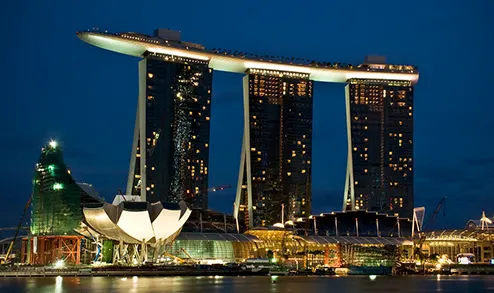
Malaysian Man Faces Charges for Allegedly Using Device to Record Cards Dealt at Marina Bay Sands CasinoA 45-year-old Malaysian man called Chai Hee Keong, believed to be part of a syndicate, has been charged for allegedly using a device to record the cards being dealt during baccarat games at Marina Bay Sands Casino. The man was arrested in Malaysia on June 8 this year thanks to the assistance of the Royal Malaysia Police.

Before the police put the handcuffs on Chai, the State Courts in Singapore issued a warrant for his arrest. After Chai was detained, the suspect was immediately transferred to the Singapore Police Force for further questioning and processing. Chai is believed to be linked to a previous investigation into a similar case, which commenced on December 24 by the Criminal Investigation Department’s Casino Crime Investigation branch.

In February this year, a 35-year-old Malaysian man was arrested as part of the probe. Casino chips of over SGD750k, a mobile phone, and cash were confiscated by law enforcement authorities. On December 26, 2022, Hung Jung-Hao, a 27-year-old Taiwanese man was also accused of participating in the syndicate.

How the Illegal Card-Filming Ring was Operating?

Court documents reveal that the syndicate in question consists of nine people, with Chai being among them. Other people involved in the ring are Wang Yu, Hung Yu-Wen, Hung Jung-Hao, Chou Yu-Lun, and Tan Kian Yi. Three others are still unknown. Chai allegedly used a device to record cards dealt during a baccarat game, transferring the information to the members of a chat group called “15/12Work in Singapore Chat Group(9)”.

On June 9, Chai was charged with participating in an illegal syndicate and violating the Casino Control Act 2006, under which everyone caught using devices to record cards being dealt during a casino game will face up to seven years of prison time, an SGD150k fine, or both.

Hung Jung-Hao was accused of using a mobile phone to record the value and suits of the cards being dealt in the course of a baccarat game. He was caught sending the recordings to the members of the chat between 1:49 am and 1:52 am on December 23.

Hung’s lawyers said their client should be released on bail because the remand period may be longer than the sentence he would get. Prosecution lawyers argued that since Hung is a foreigner, the law allows for longer remand, while the judge agreed he poses a flight risk.

The Singapore Police Force announced that it will continue to work towards eradicating casino crime and busting everyone engaged in the conspiracy. Under Singapore’s gambling law, card counting is not illegal as long as players do not use any devices to beat the game.

California Governor Approves Bill, Imposing Moratorium on Cardroom Expansion Until 2043

California Governor Approves Bill, Imposing Moratorium on Cardroom Expansion Until 2043On Monday, Governor Gavin Newsom signed Assembly Bill 341 into law, which prevents new cardrooms from opening in the state for the next 20 years. However, existing cardrooms with less than 20 tables can add up to 10 new table games. Under the provisions of the law, the expansion should happen gradually, allowing cardroom operators to add two new tables in the first year after the law comes into effect. After that, a maximum of two tables can be added every four years. The law aims to ensure steady growth of the gambling industry without over-expansion.
Small Cardrooms in California Allowed to Add Up to 10 More Table Games

Assembly Bill 341 finally became law this Monday after Gov. Newsom signed the legislation, reinstating the moratorium on new cardrooms until 2043. Sponsored by Assemblymember James Ramos, the legislation won the support of over 40 California tribes and cardrooms, agreeing to extend the moratorium period for two more decades. In March, the California State Assembly approved the bill on a 68-1 vote, while the Senate unanimously passed the legislation earlier this month.

The moratorium was initially established by the Gambling Control Act of 1997. The legislation expanded it repeatedly until it finally expired on January 1, 2023. To ensure the healthy growth of the gambling industry, tribes and cardroom operators has joined forces, supporting AB 341, under which no new cardrooms can open before January 1, 2043.

Existing cardrooms operating fewer than 20 table games can add up to 10 new tables over the next 20 years. To avoid over-expansion, the law allows cardrooms to introduce two more table games in the first year after AB 341 comes into effect, and two more table games every four years. The bill exempts the two cardrooms in San Jose, allowing them to add up to 15 table games each.

Tribes and Cardroom Operators Work Together to Ensure Gambling Market Growth Without Overexpansion

In a statement, Ramos thanked Gov. Newsom for his support and said that the bill united tribes and cardroom operators in an effort to ensure the “vitality” of the gambling market. Keith Sharp, President of the California Cardroom Alliance, said that the expansion of smaller cardrooms would create more jobs and boost local economies. Morongo Tribal Chairman Charles Martin added that lawmakers’ support for AB 341 reflects California voters’ will.

The California cardroom industry can be traced back to the 1800s. In 1998, the state adopted the Gambling Control Act and established a regulatory body – the California Gambling Control Commission and Bureau of Gambling Control. The Gambling Control Act imposed a 10-year moratorium on new cardrooms and cardroom expansion. But small cardrooms did not agree with the moratorium and asked lawmakers to allow them to expand their operations.

But California tribes said such a move would violate their exclusive rights on house-banked games. As a result, Senator Bill Dodd told the tribes that they must reach a consensus with cardroom operators if they want the moratorium to be extended.

North Carolina Senate Committee Approves Sports Betting Bill After Introducing Several Significant Amendments

North Carolina Senate Committee Approves Sports Betting Bill After Introducing Several Significant AmendmentsOn Wednesday, the Senate Commerce and Insurance Committee approved a bill that would legalize sports betting in North Carolina after making some major changes. The reforms introduced by state senators aim to legalize parimutuel horse racing betting, allow sports fans to place cash bets in person at sports venues, and raise the tax rate on online sports betting revenue from 14% to 18%.

According to experts, the changes introduced by the Senate could cause conflict between House and Senate members, which raises the question of whether lawmakers would pass the bill before the early summer when the year’s primary General Assembly work is expected to end.

What Changes to North Carolina’s Sports Betting Bill Senators Propose?

As BonusInsider reported at the end of March this year, North Carolina’s House of Representatives passed House Bill 347, which aims to allow online betting on professional, amateur, and collegiate sports events. The bill now heads to the Senate Finance Committee for consideration after the Senate Committee on Commerce and Insurance approved the measure this Wednesday.

But state senators introduced significant changes to the legislation, authored by Rep. Jason Saine (R-Lincoln). The new changes seek to add parimutuel betting on horse racing to the list of allowed betting options. The amended version of the bill stipulates that operators can acquire an advance-deposit wagering (ADW) license in exchange for 1% of their annual parimutuel wagering handle.

Besides, betting operators will have to pay a tax of 18% instead of the previously proposed 14% on their revenue. Under the new version of the bill, operators will not be allowed to benefit from promotional deductions. Lawmakers, however, did not change the number of sports betting licenses up for grabs. If approved, the bill would allow 12 betting companies to enter the market.

Furthermore, the revised version of the bill seeks to allow anyone of legal gambling age to place a cash bet at a betting window at a sports venue without opening an account.

How Revenue from Sports Betting Operations Would Be Distributed among Institutions?

Under the amended version of the bill, East Carolina University, Appalachian State University, and the University of North Carolina at Charlotte would receive $300k annually from sports betting. As much as $2 million from revenue from mobile sports betting would go to fund problem gambling treatment resources.

Other institutions that would receive revenue from sports betting include the North Carolina Division of Parks and Recreation and the North Carolina Outdoor Heritage Advisory Council. The remaining revenue would be directed to the General Fund and the North Carolina Major Events, Games, and Attractions Fund.

Rep. Jason Saine of Lincoln refused to comment on the proposed changes. Supporters of Saine’s bill explained that the government must license and tax operators in order to combat illegal sports betting activities. Senator Tim Moffitt, a Henderson County Republican, said that many people in North Carolina wager on sports online although it is illegal under current state laws.

Before the bill appears on Governor Roy Cooper’s desk, it should be approved by all Senate committees and the House. North Carolina’s sports betting market is expected to be up and running as of January 8, 2024.

DraftKings Appears on Massachusetts Gambling Regulator’s Radar for Accepting Bets on Unauthorized Sporting Event

DraftKings Appears on Massachusetts Gambling Regulator's Radar for Accepting Bets on Unauthorized Sporting EventOn Monday, the Massachusetts Gaming Commission (MGC) expressed discontent with one of its licensees – DraftKings – for taking bets on a sporting event on which gambling is not permitted. The betting company self-reported the violations to the gambling regulator. Although the watchdog has not issued a fine yet, it plans to hold a hearing, allowing the sports betting operator to explain the reason for the incident.
DraftKings Becomes the First Sportsbook in Massachusetts to Undergo an Adjudicatory Hearing

DraftKings, a major US sportsbook, admitted that it accepted bets on UTR Pro Tennis events from March 10 to March 22, even though the event is not included in the sports wagering catalog approved by the Massachusetts Gaming Commission. The operator explained that miscommunication between the trading and compliance teams was the reason that caused the violation.

DraftKings officials elaborated that the betting menu geared toward a different market was copied without being verified and presented to Massachusetts bettors. Investigations and Enforcement Bureau (IEB) Attorney Zachary Mercer announced that DraftKings accepted 864 wagers on the tennis event for a total handle of $7,867. He added that winning wagers were voided from punters’ accounts while losing bets were refunded.

At a meeting held on Monday, MGC Chair Cathy Judd-Stein said operators should be aware that the regulator takes such violations seriously. Commissioner Eileen O’Brien shared her frustration with the operator’s negligence of posting a sportsbook without checking whether or not it complies with state laws.

Initially, the gambling regulator thought of transferring the case to the Investigations and Enforcement Bureau, but eventually, it decided to hold a public hearing. DraftKings is the first licensed sports betting operator in Massachusetts to undergo an adjudicatory hearing.

What Sports Can Massachusetts Residents Wager On?

Sports betting went live in Massachusetts on March 10. Despite the fact that the sports betting industry has been up and running for just several months now, DraftKings is not the only sportsbook fined for violating state laws. At the end of March, Barstool Sportsbook was fined for using the phrase “Can’t Lose Parlay” in its advertisement, which is against Massachusetts’ responsible marketing code.

In January this year, the Massachusetts Gaming Commission approved a sports wagering catalog that lays out the exact sporting events on which Massachusetts punters can wager. Betting on most major leagues like the National Football League (NFL), National Basketball Association (NBA), and Major League Baseball (MLB) is allowed.

Massachusetts residents can also wager on college sporting events as long as these are not non-tournament games in which Massachusetts teams participate. Betting on league drafts, subjective awards, and entertainment awards is also allowed.

Under Massachusetts law, bettors can place different types of wagers, including single-game bets, teasers, parlays, totals, moneyline bets, in-play bets, exchange wagering, and props. Licensed betting platforms are also allowed to offer point-spread wagering, futures, cashouts, and each-way wagering.

Massachusetts Regulator Slaps $45k Fine on MGM Springfield for Letting Underage Individuals Access the Gaming Floor

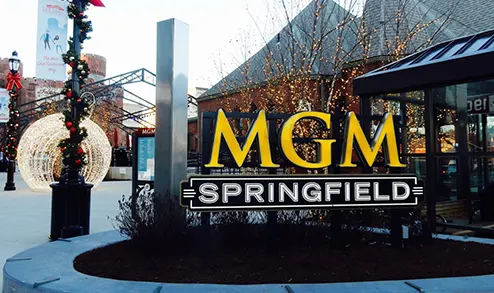
Massachusetts Regulator Slaps $45k Fine on MGM Springfield for Letting Underage Individuals Access the Gaming FloorOn Monday, the Massachusetts Gaming Commission handed a $45k fine to MGM Springfield after the gambling venue admitted that it failed to prevent underage individuals from accessing the gaming floor. The casino has already taken steps to make individuals below 21 stay away from MGM Springfield’s gambling area. The company is busy installing more railings and a security station close to its South End Market food court.

MGM Springfield Self-Reported Many of the Incidents

Yesterday, the Massachusetts gambling watchdog fined MGM Springfield $45k for failing to block underage individuals’ access to the gaming floor multiple times between June and December 2022. To prevent similar incidents in the future, MGM Springfield is installing a security station and additional railings, which are expected to be ready until next week.

MGM Springfield agreed to pay the $45k administrative penalty after admitting that multiple incidents of underage people accessing the gaming floor happened recently. Kathleen Kramer, senior enforcement counsel at the Massachusetts Gaming Commission, said that the company self-reported many of the incidents, which is commendable.

Ms. Kramer added that the commission appreciates the gambling company’s cooperation and that the Investigations and Enforcement Bureau will keep MGM Springfield under observation.

MGM Springfield features an inside-out design, which explains why the casino has multiple entries. The venue also offers non-gambling amenities open to underage individuals, including a movie theater, restaurants, and bowling.

Casino Security Caught 127 Underage Individuals on the Gaming Floor in the First Three Months of the Year

According to a report submitted by MGM Springfield to the commission on Monday, security at the gambling venue found 127 underage individuals gambling or drinking from January to March this year. Of all underage individuals caught on the gaming floor, 115 were prevented from gambling, while 12 managed to place a wager.

A 19-year-old was on the gaming floor for almost an hour and a half before she tried to cash out her father’s winning ticket, which is against state laws. Another case shows that casino security intercepted an underage individual after 8 seconds on the gaming floor.

According to the report, 57 underage individuals were prevented from gambling, and four managed to place a bet before being intercepted in January this year. In February, the casino found 31 underage individuals on the gaming floor and prevented 28 from gambling. In March, 35 underage individuals were caught on the gaming floor, of which 30 were prevented from gambling.

Commissioner Bradford R. Hill said that these numbers are alarming. Gus Kim, vice president and legal counsel at MGM, responded that the company aims to reduce the number of underage individuals accessing the casino floor to zero. He added that families with children often cut across the casino when they come from the parking deck and want to reach the arena. Hills reminded that underage individuals should stay away from the carpeted gambling floor.

San Jose’s Planned Gambling Expansion Face Legislative Hurdles

San Jose's Planned Gambling Expansion Face Legislative HurdlesLast week, media outlet San Jose Spotlight reported that the state legislature passed Assembly Bill 341, which seeks to limit the number of licenses and tables for cardrooms, with some exceptions. Should Governor Gavin Newsom sign the bill into law, the ban will remain in effect until January 1, 2043.

The legislative measure comes three years after San Jose voters approved Measure H, under which the two casinos in San Jose, Bay 101 and Casino M8trix, would be allowed to add more table games. In return, operators would be required to pay additional taxes.

There is Still Hope for San Jose’s Cardrooms to Expand Gambling Operations

San Jose may need to scrap its gambling expansion plans for the coming 20 years as the state Legislature voted in favor of Assembly Bill 341, under which no new card rooms would be allowed to open in California, and existing ones would be prohibited from adding new table games.

The bill includes a provision, exempting San Jose from the ban, but it is unclear whether or not the California Gambling Control Board will approve it. In an interview with San Jose Spotlight, General Manager Ron Werner said that he believes San Jose will be allowed to realize its gambling expansion plans. Given that the Assembly Bill becomes law, it will limit the expansion to 10 table games per casino.

In 2020, 73% of San Jose voters approved Measure H, under which the two casinos in San Jose would be allowed to host a maximum of 64 table games each if operators agree to pay the city 1.5% more in taxes, or a total of 16.5%. Under the new tax regime, the city was expected to generate approximately $15 million in tax revenues, and money would go to support community projects such as fire protection, emergency response, infrastructure, youth programs, and homeless prevention.

Cardroom Operators in San Jose Pay Additional Taxes Without Being Allowed to Expand

But the state of California rejected the city’s request to allow Bay 101 and Casino M8trix to add 15 more table games each in 2021 and in April this year. The Gambling Control Commission explained that the maximum number of table games per card room in San Jose is 49, and the existing gambling venues have already reached this limit.

Under the state’s Gambling Control Act, cities are not allowed to increase the number of table games in card rooms by 25% or more than the number of table games they had on January 1, 1996. In 1992, San Jose capped the number of table games in each card room at 40. Four years later, the city adopted a citywide limit of 181. But the Gambling Control Commission considers 40 as the maximum number of table games per casino.

Although the state imposed a moratorium on cardroom expansion, the 1.5% tax increase on casinos has been implemented. Derrick Seaver, Chief Executive Officer and president of the San Jose Chamber of Commerce, commented that operators should not pay higher taxes as they were not allowed to add more table games. In 2021, Bay 101 decided to legally challenge the state’s decision, urging the Commission to overturn its ruling. The case is still pending.

Long Islanders Protest against Las Vegas Sands’ Casino Project at the Nassau Coliseum

Long Islanders Protest against Las Vegas Sands' Casino Project at the Nassau ColiseumOn Sunday, Long Islanders opposing the $4-billion casino and resort project at the Nassau Coliseum gathered together to urge legislators to vote against Las Vegas Sand’s proposal. On Monday, policymakers are expected to vote on transferring the land lease for the gambling venue to Las Vegas Sands.

Casino naysayers claim that a gambling venue at the Nassau Coliseum will have more negative than positive effects. Westbury Mayor Peter I. Cavallaro confirmed that the site must be redeveloped, but in his view, there are better ways to go than bringing a casino to the area.

Casino Opponents Urge Lawmakers to Vote Against the Lease of Nassau Coliseum to Las Vegas Sands

On May 21, a group of Long Islanders gathered outside the Nassau Legislative Building to rally against Las Vegas Sands’ proposed casino at the Nassau Coliseum site. The protest was organized by the “Say No to the Casino Civic Association” in a bid to convince legislators to vote against a proposal seeking to transfer the lease of the Nassau Coliseum to Las Vegas Sands. Westbury Mayor Peter I. Cavallaro said that the site has been in urgent need of redevelopment for a somewhat long time, but building a casino there would not benefit Long Islanders.

On May 9, four out of seven members of the Nassau Legislature’s Rules Committee approved the transfer lease. The vote occurred after a 6-hour-long public hearing. Garden City Mayor Mary Carter Flanagan, who is against the casino project, urged members of the “Say No to the Casino Civic Association” to stand their ground and do something as this would be the last time they can voice their concerns.

As BonusInsider reported in April, Hofstra University even filed a lawsuit against the Nassau County Planning Commission for its early casino planning discussions. University officials strongly oppose Las Vegas Sands’ proposed casino and resort near its campus on Long Island.

Las Vegas Sands Gains Support for Its $4-Billion Nassau Coliseum Casino Project

Although the gambling venue faces stiff opposition, it has many supporters, with Nassau County Executive Bruce Blakeman being one of them. Casino proponents argue that Las Vegas Sands’ project would boost the county’s economy, create jobs, attract tourists, and support local businesses.

Ron Reese, senior vice president of global communications and corporate affairs for Las Vegas Sands, issued a statement in response to casino opponents’ concerns, in which he explained that company officials attended over 300 community meetings, during which they discussed the casino project in detail.

He used the statement to thank all institutions, including Nassau Community College, Long Island University, NAACP New York State Conference, Uniondale Chamber of Commerce and the Nassau Council of Chambers, the Long Island Association, and others, for supporting Las Vegas Sands’ casino project. In the statement, Reese noted that the company is open to further meetings with residents.

Video Game Loot Boxes are the Subject of Proposed Class Action Lawsuit against Nintendo

Video Game Loot Boxes are the Subject of Proposed Class Action Lawsuit against NintendoAlthough Nintendo removed the loot box elements of Mario Kart Tour last October over claims that it deceptively lured underage players, the company now faces a proposed class action. The 25-page complaint claims that the company used underhanded means to convince players to make in-game purchases. The filing also claims that the loot boxes contained prizes and rewards that players already had or did not need.

Making In-Game Purchases is Obligatory to Advance in the Mario Kart Tour Game, the Suit Claims

The complaint was initially filed in California state in March, but on May 17, it moved to federal court. According to the case, Nintendo of America, Inc. unlawfully declined to refund underage individuals, who made in-game purchases. The filing also claims that the company made in-game purchases essential for players to progress in the game, stimulating addictive behavior similar to gambling.

The suit alleges that advancing through the Mario Kart Tour game is time-consuming and invariably associated with making in-game purchases. Players buy in-game currency called “Rubies”. Those who pay five Rubies can draw one random item that will help them advance in the game. According to the filing, players can pay 45 Rubies to fire the “Spotlight Pipe” ten times and draw ten different in-game items. In other words, players pay between $2.60 and $3.32 for the opportunity to draw a single item and from $23.40 to $29.84 to purchase ten items at a time.

The suit describes the game in detail, explaining that a player can collect no more than 30 coins per race. The filing also claims that the game was intentionally designed this way to induce players to buy in-game currency or rotating gift sets. The price of a pack of in-game currency can reach $70.

Nintendo’s Mario Kart Tour Game Includes Gambling and is Not Suitable for Children

The case also alleges that players are not given information about the gifts they will receive. The filing also claims that the chance of drawing a valuable item is very slim, stimulating players to continue making in-game purchases. Besides, the suit alleges that Mario Kart Tour is more of a gambling game, which is not appropriate for minors.

The lawsuit also alleges that if players knew the odds of drawing a given valuable item, they would never spend even a cent on the “Spotlight Pipes” loot box. According to the filing, such games are mostly played by underage individuals, who are susceptible to buying such in-game items.

The Federal Trade Commission (FTC) claims that the game uses various “dark patterns” to persuade players to make in-game purchases. The “grinding” pattern makes it almost impossible for players to progress, so they have to make an in-app purchase to advance in the game. “Play to Skip” is another popular dark pattern that requires players to make an in-game purchase in order to skip tedious activities. Mario Kart Tour also uses the so-called “artificial scarcity”, which makes players believe that a given valuable item will be available for a limited period.